
Fetch Variations & Other Games to Strengthen Your Bond
Fetch is the default dog game for millions of owners, but the standard “throw-chase-return-repeat” pattern often becomes a mechanical exercise rather than a connection-building experience. While it provides physical exercise, it frequently lacks engagement, communication, and the shared joy that transforms simple play into relationship-building rituals.
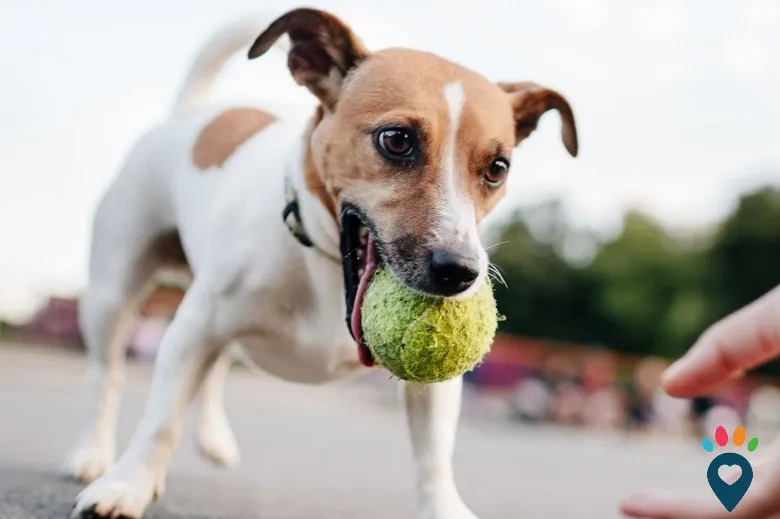
This guide moves beyond repetitive throwing to explore intentional games designed to strengthen the unique bond between you and your dog. These variations incorporate training elements, communication skills, and cooperative play that nurture trust, teamwork, and mutual understanding—turning playtime into the highlight of both your days.
Part 1: The Philosophy of Bond-Centric Play
What Makes Play “Bonding” vs. Just Exercise?
Bond-strengthening play incorporates these key elements:
- Shared Focus: Both parties are actively engaged with each other, not just the object.
- Communication Exchange: Clear cues, reads of body language, and mutual understanding are practiced.
- Cooperation & Teamwork: You work together toward a shared fun goal.
- Predictable Joy: The game builds positive anticipation and ends on a high note.
- Respect for Boundaries: Both human and canine preferences are honored.
The Pre-Play Mindset: Setting Up for Success
- Check Your Energy: Your dog mirrors your emotional state. Start calm and enthusiastic, not frantic.
- Manage the Environment: Choose a safe, familiar space with minimal distractions for new games.
- Use the Right Gear: A long-line (15-30ft) can provide freedom and safety in open spaces. Avoid retractable leashes.
- Value Quality Over Duration: A focused, fun 10-minute game is better than 30 minutes of repetitive, disengaged fetch.
Part 2: Advanced Fetch Variations (The “Thinking Dog’s Fetch”)
These games turn a simple retrieve into a mental workout that requires your dog to listen, problem-solve, and engage with you, not just the ball.
1. The “Two-Ball” or “Multi-Retrieve” Game
The Goal: Teach impulse control, “drop it,” and build excitement through anticipation.
How to Play:
- Start with two identical, high-value balls.
- Show your dog both balls, then throw one.
- As they return with the first ball, show them the second.
- Ask for a “drop” or “out” of the first ball. The moment they drop it, excitedly throw the second.
- Pick up the first ball while they retrieve the second, and repeat.
Bonding Benefit: Builds clear communication around the “drop” cue and teaches your dog that cooperation (dropping) leads to more fun (another throw).
2. “Hide-and-Go-Fetch” (Scent + Retrieve Combo)
The Goal: Engage your dog’s powerful nose and turn retrieve into a cooperative search mission.
How to Play:
- Have your dog in a “stay” or wait behind a barrier.
- Show them the toy, then hide it in plain sight behind a tree, bench, or low bush.
- Release them with an excited “Find it!”.
- Gradually increase the hiding difficulty as they succeed.
Bonding Benefit: Positions you as the facilitator of an exciting hunt. Your cue (“Find it!”) starts the fun, building your role as a team leader.
3. Directional Fetch (“Left/Right” or “Back”)
The Goal: Develop advanced communication and off-leash control.
How to Play:
- With your dog sitting in front of you, place a visible marker (cone, stick) 10 feet to the left and another 10 feet to the right.
- Toss a ball or treat directly towards one marker while giving the directional cue (“Go left!”).
- Reward them heavily for going towards the correct marker, even if guided by the toss at first.
- Gradually fade the obvious toss and rely more on your verbal cue and hand signal.
Bonding Benefit: This is advanced teamwork. It requires your dog to listen closely and trust your guidance, deepening mutual understanding.
4. The “Fetch and Perform” Circuit
The Goal: Integrate obedience into play, making training rewarding.
How to Play:
- Create a small circuit with 2-3 stations (e.g., a mat, a cone, a low hurdle).
- Throw the toy. When your dog returns, ask for a behavior before the next throw (e.g., “Sit,” “Touch” your hand, “Go to your mat”).
- Vary the requested behavior each time.
Bonding Benefit: Blurs the line between work (obedience) and play (fetch). Your dog learns that listening to you is part of the fun game.
Part 3: Beyond Fetch: Games Built for Connection
1. The “Nosework” or “Find the Treats” Game
The Goal: Tap into natural instincts in a controlled, rewarding way.
How to Play:
- Have your dog wait in another room or in a “stay.”
- Take a handful of high-value, smelly treats (or hide their favorite toy).
- Drag your hand along the floor to create a scent trail, placing treats in increasingly challenging spots (on a chair leg, under a corner of a rug, inside a cardboard box).
- Release your dog with an enthusiastic “Find it!” and watch them work.
Bonding Benefit: You set up a rewarding challenge for your dog. Their success is your shared victory.
2. “Tug-of-War” with Rules (The Relationship Game)
Goal: Teach impulse control and build respectful engagement.
Rules for Bond-Building Tug:
- You Start, You End: Initiate the game with a cue (“Tug!”) and end it with a release cue (“Drop!” or “All done!”).
- Practice the “Drop”: Periodically mid-game, ask for a “drop.” The moment they release, immediately restart the game. This teaches that dropping leads to more play, not less.
- Respect “Take it” vs. “Drop”: Your dog should only take the toy on cue and release it on cue.
Bonding Benefit: Builds immense trust and communication. Your dog learns that self-control and listening are compatible with high-arousal fun.
3. The “Name Game” with Toys
Goal: Strengthen vocabulary and object identification.
How to Play:
- Start with two distinct toys your dog knows well (e.g., “ball” and “rope”).
- Place them a few feet apart. Ask for one by name (“Get the rope!”).
- Celebrate and play briefly with the correct toy when they choose it.
- Gradually add more toys and place them in different rooms to increase difficulty.
Bonding Benefit: This is sophisticated communication. Your dog feels accomplished for understanding your words, and you are amazed by their intelligence.
4. “Copycat” or “Do As I Do” Game
Goal: Build observation skills and deepen the human-dog connection through imitation.
How to Play:
- Get your dog’s attention. Perform a simple action they know (e.g., touch a target with your hand, spin in a circle, jump over a stick).
- Use a specific cue like “Copy!” or “Do it!”.
- When they perform a similar action, mark (click or say “yes!”) and reward.
- This is an advanced concept but can start with very simple, familiar behaviors.
Bonding Benefit: This game requires your dog to watch you closely and think about how to mimic you, creating a unique, thoughtful connection.
Part 4: Making It Work – The Play Session Blueprint
The Ideal 15-Minute Bonding Play Session:
- Warm-Up (2 mins): Calm greeting, gentle petting, stretching.
- Engagement Game (5 mins): Choose one “thinking” fetch variation or a nosework game.
- High-Energy Fun (5 mins): Play a round of structured tug or classic fetch to burn steam.
- Cool-Down (3 mins): Practice a calm behavior like “settle” on a mat with a chew toy or gentle grooming.
Reading Your Dog’s Play Language:
- Keep Going Signs: Play bows, relaxed “smiling” mouth, bouncing movements, bringing toys to you.
- Need a Break Signs: Turning head away, lying down suddenly, excessive panting, walking away from the game.
- Stop Signs: Stiffening, lip-licking, growling (that’s not play-growling), hiding.
Always honor the “break” or “stop” signs immediately. This teaches your dog that you respect their boundaries, which is fundamental to trust.
Conclusion: Play as the Heart of Your Relationship
The games you play with your dog lay the foundation for your entire relationship. By choosing to play with intention—focusing on cooperation, communication, and shared joy over mere exhaustion—you build more than just a tired dog.
You build a partner who looks to you for guidance, trusts you to set the rules of fun, and finds their greatest satisfaction in interacting with you. You build inside jokes (like the specific way you say “Find it!”), rituals of connection (the post-tug victory snuggle), and a language all your own.
Put down the phone during playtime. Be fully present. Watch your dog’s face light up when they understand the new game you’re teaching. Celebrate the small victories. The investment you make in playful, mindful engagement today pays infinite dividends in loyalty, understanding, and pure, joyful companionship for all your days together.
The strongest bonds aren’t forged through treats or walks alone, but in the shared, delighted space of play.
Disclaimer: Always prioritize safety during play. Choose games and toys appropriate for your dog’s size, age, and health. Supervise all play sessions, especially with toys that could be destroyed and ingested. If your dog shows any signs of resource guarding or aggression during play, stop the game and consult a certified professional dog trainer or behaviorist. The author and publisher assume no liability for injuries or incidents resulting from the games described.