
Interactive Puzzle Toys: Keeping Your Smart Dog Mentally Stimulated
Intelligent dogs aren’t just energetic—they’re mentally restless. Without proper cognitive challenges, bright breeds like Border Collies, German Shepherds, Poodles, and even clever mixed breeds can develop what trainers call “the smart dog syndrome”: destructive behaviors born from boredom, not disobedience. Traditional exercise addresses only half their needs; mental stimulation completes the equation.
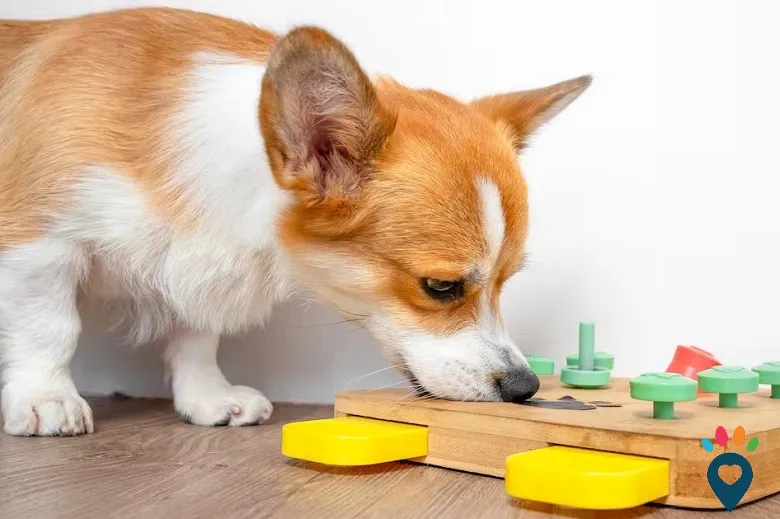
Interactive puzzle toys represent a breakthrough in canine enrichment, transforming meal times and quiet periods into engaging problem-solving sessions. This comprehensive guide explores how strategic toy use can prevent behavioral issues, reduce anxiety, and deepen your bond with your clever companion. We’ll move beyond basic recommendations to provide a scientific approach to cognitive enrichment that matches your dog’s unique intelligence level.
Section 1: The Science Behind Canine Cognitive Enrichment
Understanding Your Dog’s Brain
Dogs possess remarkable cognitive abilities:
- Problem-solving intelligence: Capacity to manipulate objects for rewards
- Working memory: Remembering solutions to previously encountered puzzles
- Inferential reasoning: Understanding cause and effect relationships
- Spatial awareness: Navigating physical challenges
The Consequences of Mental Under-stimulation
When intelligent dogs lack cognitive challenges:
- Destructive behaviors emerge as self-created “jobs”
- Anxiety and hyperactivity increase
- Obsessive tendencies develop (shadow chasing, excessive licking)
- Training responsiveness decreases due to disengagement
The Benefits of Strategic Puzzle Play
Regular mental stimulation through puzzles:
- Reduces stress hormones (cortisol) while increasing dopamine
- Prevents cognitive decline in senior dogs
- Builds confidence through mastery of challenges
- Provides natural tiredness comparable to physical exercise
- Strengthens human-dog bond through positive interactions
Section 2: The Puzzle Toy Spectrum: From Beginner to Expert
Level 1: Introductory Puzzles (Novice Thinkers)
Ideal for: First-time puzzle users, puppies, seniors, or easily frustrated dogs
Characteristics:
- Minimal steps to solution
- Clear cause-and-effect relationship
- Large, easy-to-manipulate parts
- Low frustration design
Examples:
- Snuffle mats: Foraging-based, no moving parts
- Muffin tin with tennis balls: Simple object removal
- Kong Wobbler: Nudge-activated food dispenser
- Rolling treat balls: Movement yields reward
Success strategy: Start with high-value treats, demonstrate solution once, celebrate all attempts
Level 2: Intermediate Challenges (Seasoned Solvers)
Ideal for: Dogs who master Level 1, medium-energy breeds, adolescents
Characteristics:
- 2-3 step solutions
- Combination of sliding, lifting, or rotating parts
- Some planning required
- Moderate difficulty
Examples:
- Sliding puzzle boards with multiple compartments
- Flip-and-win toys with lids and flaps
- Multi-part puzzles requiring sequential actions
- Hide-and-seek plush toys with interior pockets
Success strategy: Allow 5-10 minutes of independent work, intervene before frustration sets in
Level 3: Advanced Cognitive Games (Canine Einsteins)
Ideal for: Working breeds, highly food-motivated dogs, puzzle enthusiasts
Characteristics:
- 4+ step solutions
- Combination locks or sequential mechanisms
- Memory and planning components
- Potentially frustrating but highly rewarding
Examples:
- Nina Ottosson’s “Dog Tornado”: Multi-level rotating puzzle
- Trixie’s “Move 2 Win”: Strategic sliding block puzzle
- CleverPet interactive game console: Light-and-sound based problems
- Custom-built obstacle puzzles with multiple solution paths
Success strategy: Work alongside initially, teach “reset” cue, use only when supervised
Level 4: Interactive Technology (21st Century Canines)
Emerging category:
- Automatic ball launchers with remote control
- Treat-dispensing cameras for remote interaction
- Motion-activated puzzle boxes
- Smart toys that adjust difficulty based on success rate
Considerations: Higher cost, require charging/monitoring, best for tech-savvy households
Section 3: The Strategic Implementation Framework
Building a Puzzle Toy Rotation System
The 4-Toy Rotation Method:
- Mealtime toy: Associates puzzles with primary feeding
- Training supplement: Lower-value puzzles used during skill sessions
- Occupational therapy: Higher-difficulty toys for targeted mental work
- Novelty item: New or rarely used toy to maintain interest
Weekly schedule example:
- Monday/Wednesday/Friday: Mealtime puzzle + 15-min training puzzle
- Tuesday/Thursday: Occupational puzzle session
- Saturday: Novelty puzzle introduction
- Sunday: “Free choice” from toy basket
Matching Puzzles to Canine Personalities
The Methodical Muncher:
- Prefers systematic solutions
- Enjoys: Sliding puzzles, sequential challenges
- Avoid: Timed or movement-based puzzles
The Energetic Explorer:
- Uses physicality in problem-solving
- Enjoys: Rolling puzzles, interactive fetch toys
- Avoid: Delicate or easily damaged puzzles
The Sniff Specialist:
- Relies on scent over sight
- Enjoys: Snuffle mats, hidden compartment toys
- Avoid: Visually-dependent puzzles
The Social Strategist:
- Prefers human-involved solving
- Enjoys: Cooperative puzzles, turn-based games
- Avoid: Independent-only challenges
Progressive Difficulty Protocol
Week 1-2: Single-action puzzles with high-value rewards
Week 3-4: Two-step puzzles introduced during peak engagement times
Week 5-6: Mixed-difficulty basket with choice option
Week 7+: Introduce one advanced puzzle monthly, maintain rotation
Section 4: DIY Puzzle Toys: Cost-Effective Cognitive Challenges
Household Item Transformations
1. The Cardboard Cascade
- Materials: Cardboard boxes, paper towel tubes, treats
- Construction: Create interconnected tubes and chambers
- Skill development: Spatial reasoning, gentle destruction
2. Muffin Tin Mania
- Materials: Muffin tin, tennis balls or cupcake liners
- Construction: Hide treats under covers in select compartments
- Skill development: Object permanence, selective investigation
3. Frozen Feast Puzzles
- Materials: Kong, yogurt container, or ice cube tray, broth, treats
- Construction: Layer treats with liquid, freeze solid
- Skill development: Persistence, temperature tolerance
4. Bottle Bowling
- Materials: Empty plastic bottles, dry kibble
- Construction: Add kibble to bottles, puncture holes for dispensing
- Skill development: Cause-and-effect, object manipulation
Safety guidelines: Supervise all DIY toys, remove damaged items immediately, avoid small parts
Section 5: Troubleshooting Common Puzzle Problems
Problem: Dog Loses Interest Quickly
Solutions:
- Increase treat value (real meat, cheese)
- Reduce initial difficulty
- Participate in first few solves
- Limit access to 10-15 minute sessions
Problem: Dog Becomes Frustrated/Destructive
Solutions:
- Step difficulty down two levels
- Use “hints” by partially solving
- Introduce “all done” cue to end sessions
- Ensure adequate physical exercise first
Problem: Dog Solves Puzzles Too Quickly
Solutions:
- Add distraction elements (TV, mild background noise)
- Use puzzle combinations (puzzle inside puzzle)
- Implement time delays between actions
- Create multi-room puzzle trails
Problem: Resource Guarding Emerges
Solutions:
- Use puzzles only during supervised sessions
- Trade-up protocol: offer higher value item for puzzle
- Multiple identical puzzles for multi-dog homes
- Consult behavior professional if severe
Section 6: Specialized Applications
For Anxious Dogs:
- Slow-feeding puzzles reduce gulping and bloat risk
- Lick mats and slow-dispensing toys increase calming endorphins
- Predictable puzzle routines build confidence
For Senior Dogs:
- Lower-impact puzzles maintain cognitive function
- Scent-based puzzles compensate for vision/hearing loss
- Shorter sessions prevent frustration or fatigue
For Puppies:
- Develops problem-solving skills during critical periods
- Prevents destructive chewing through appropriate outlets
- Builds positive associations with independent play
For Multi-Dog Households:
- Individual puzzle stations prevent competition
- Varying difficulty levels accommodate different abilities
- Supervised group puzzles teach cooperation
Section 7: Measuring Success and Progress
Positive Indicators:
- Engagement time increases per session
- Independent initiation of puzzle play
- Transferable skills to new puzzles
- Calm demeanor after sessions
- Reduced destructive behaviors overall
Progress Tracking Template:
| Week | Puzzle Type | Avg. Solve Time | Success Rate | Engagement Level |
|---|---|---|---|---|
| 1 | Level 1 | 2-3 minutes | 90% | Moderate |
| 3 | Level 2 | 5-7 minutes | 70% | High |
| 6 | Level 3 | 10-15 minutes | 50% | Selective |
When to Advance:
- 80%+ success rate at current level
- Consistent engagement for 2+ weeks
- Signs of boredom (quick solving, reduced interest)
- Mastery of all available puzzles at level
Section 8: Integrating Puzzles into Overall Enrichment
The Balanced Enrichment Day:
- Morning: Physical exercise (walk/play)
- Midday: Meal-time puzzle
- Afternoon: Training session + puzzle combo
- Evening: Calming chew or lick mat
- Weekend: Novel puzzle introduction
Combining Puzzles with Other Enrichment:
- Puzzle + scent work: Hide puzzle itself for finding first
- Puzzle + training: Use puzzle rewards for obedience practice
- Puzzle + socialization: Cooperative solving with other dogs/humans
- Puzzle + agility: Physical navigation to reach puzzle station
Conclusion: Building a Thinking Partner, Not Just a Pet
Interactive puzzle toys represent more than entertainment—they’re tools for unlocking your dog’s cognitive potential and preventing the behavioral issues that plague intelligent breeds. By strategically implementing a puzzle program, you’re not just “keeping them busy”; you’re honoring their intelligence, building their confidence, and creating a more harmonious household.
Remember that puzzles are one component of comprehensive mental stimulation. Combine them with training, exploration, social interaction, and novelty to create truly balanced cognitive development. Observe your dog’s unique problem-solving style and adapt accordingly—some dogs are strategic planners, others are enthusiastic experimenters. Celebrate their individual approach.
The most significant transformation you’ll witness isn’t just in reduced destruction or increased calmness, but in the spark of engagement in your dog’s eyes when presented with a new challenge. That moment of “I can figure this out” confidence is the ultimate reward of thoughtful cognitive enrichment, creating a thinking partner who’s as mentally fulfilled as they are physically tired.
Start simple, observe closely, and prepare to be amazed by what your dog’s mind can achieve.
Disclaimer: This guide provides general recommendations for canine cognitive enrichment through puzzle toys. Always supervise your dog with new toys, especially those with movable parts or potential breakage points. Consult your veterinarian regarding appropriate treat types and quantities for your dog’s dietary needs. The author and publisher assume no liability for injuries, ingestions, or damages resulting from puzzle toy use. Individual dogs have different problem-solving abilities and frustration tolerances—always proceed at your dog’s pace and discontinue any toy causing stress or resource guarding.